
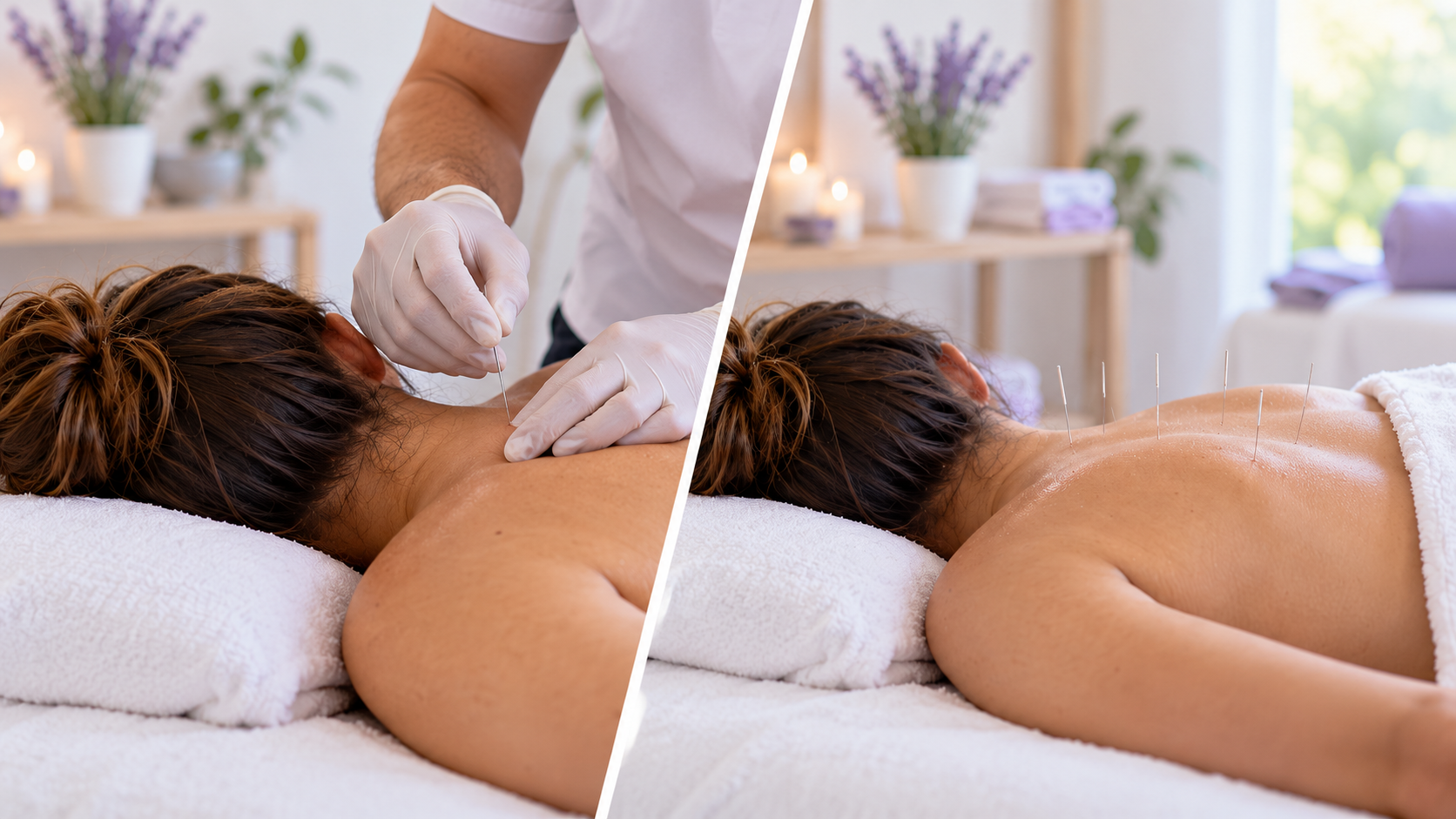
Dry Needling vs Acupuncture: What’s the Difference?
“Is that acupuncture?” It’s the question I hear most when I pick up a needle in clinic. It’s a fair one: the two treatments use exactly the same needles and can look identical from the outside. But the thinking behind them is very different, and knowing that difference helps you choose the right treatment and ask the right questions. Here’s how I explain it to my patients.
The short answer
- Same tool, different target: both use fine, solid, single-use needles
- Dry needling goes after a specific tight knot in a muscle, usually for seconds
- Acupuncture uses traditional points along the body’s meridians, with needles often left in for a while
- Neither should be a treatment on its own: the best results come when they’re paired with exercise
Where each one comes from
Acupuncture is thousands of years old. It began in China, where it was described in terms of energy channels called meridians. Over the last few decades, doctors and physiotherapists in the West have studied it through a scientific lens, which gave us what’s now called Western medical acupuncture: the same needles, explained through nerves, the spinal cord and the brain rather than energy flow.
Dry needling is much younger. It grew out of the work of an American physician, Dr Janet Travell, who mapped the tender “trigger points” in muscles that can send pain to other parts of the body. She treated them with injections. Later, clinicians noticed that the needle itself, with nothing injected, seemed to be doing much of the work. That’s where the word “dry” comes from.
How they work (as far as we know)
This is where the two genuinely part ways.
With dry needling, I’m hunting for a trigger point: a taut, irritable band within a muscle. When the needle finds it, the muscle often gives a small involuntary flick called a local twitch response. Afterwards, that band tends to soften and the area becomes less sensitive, which gives us a window to get the muscle moving and strengthening again.
With acupuncture, which we practise in the traditional way at PREP, I’m not necessarily needling the sore spot at all. Points are chosen along the meridians based on your whole picture, including sleep, stress and general health as well as pain, with the aim of restoring balance. From a scientific angle, research suggests needling these points can encourage the release of natural painkillers like endorphins, which may explain why so many people find it both soothing and pain-relieving.
Side by side
Dry needling
- Targets trigger points in muscle
- Needle in and out quickly
- May cause a brief twitch
- Often used for recent or specific muscle pain
- Can leave you a little achy for a day or two
Acupuncture
- Uses set points, often away from the pain
- Needles usually stay in for a period
- Often feels calming, even sleepy
- Used for pain and overall wellbeing
- After-effects are usually mild
What does each one feel like?
People are often surprised by how little they feel the needle go in. It’s nothing like having blood taken, because the needles are solid and far thinner.
Dry needling is the more “active” of the two. When the needle meets a trigger point, you might feel a deep cramp or a twitch for a second, and sometimes it recreates the exact ache you came in with. That’s useful information for me, and it passes quickly. Expect the muscle to feel a bit like you’ve trained it hard for a day or two.
Acupuncture is usually gentler. You may notice a dull, heavy or tingling feeling around each needle, then most people simply lie back and relax. I’ve had more than one patient nod off.
So which is better for my problem?
Honestly, it depends on what’s driving your pain, which is why a proper assessment matters more than the needle. As a rough guide from my own practice:
- A specific tight spot that stops you training or turning your neck: I’ll often reach for dry needling
- Pain that has lasted months, moves around or flares easily: acupuncture is often the better fit
- Feeling stressed, wound up or sleeping badly: acupuncture, as many people find it deeply relaxing
- Tension-type headaches: either can play a part, depending on whether tight neck muscles are the main driver
- Not keen on needles at all? That’s fine. Neither is essential, and there are always other options
Sometimes I use both in the same session. The label matters much less than whether it’s the right tool for you.
What does the research say?
I’ll be straight with you: neither treatment is a miracle, and anyone promising you one should make you suspicious. For acupuncture, the UK’s National Institute for Health and Care Excellence (NICE) includes it as an option for some types of chronic pain and for preventing tension-type headaches and migraines. For dry needling, studies suggest it can reduce muscle pain in the short term, particularly when it’s combined with exercise and other physiotherapy.
That last part is the key for both. Needling can quieten pain and loosen things up, but lasting change comes from what you do next: moving better and getting stronger. That’s why at PREP, needling is always one part of a plan, never the whole plan.
Is it safe?
In trained hands, both are very safe. The most common side effects are minor: a small bruise, a little soreness or feeling tired afterwards. A few sensible rules apply to both:
- Single-use, sterile needles, every time
- Have something to eat beforehand, as an empty stomach can leave you light-headed
- Tell your therapist if you take blood thinners, are pregnant, have a pacemaker or have any condition affecting your immune system
Three questions to ask before anyone needles you
- What are your qualifications? Look for specific training in dry needling or acupuncture. Physiotherapists in Ireland must be registered with CORU, the health and social care regulator, which is a good first check.
- What do you think is causing my pain? If there’s no clear answer, the needle is being used as a guess.
- What happens after the needling? You should leave with a plan, usually exercises, not just a follow-up booking.
Needling at PREP Physio
At our Ballsbridge clinic, both dry needling and traditional acupuncture are available with me, Ciara and Murillo. Neither costs extra: they’re part of your physiotherapy session, so they can usually be claimed on your health insurance too. See my guide to claiming physio on health insurance.
You can read more about each treatment here:
- Dry needling at PREP Physio
- Acupuncture at PREP Physio
- Back pain & sciatica, where needling is often part of the plan
Frequently asked questions
Is dry needling just acupuncture with a different name?
No. They use the same needles, but dry needling targets trigger points within muscles, while traditional acupuncture uses points along the body’s meridians and looks at your overall wellbeing as well as your pain.
Which hurts more?
Dry needling usually feels stronger, because finding a trigger point can cause a brief twitch or deep cramp. Acupuncture tends to feel milder and more relaxing.
How quickly will I notice a difference?
Some people feel looser straight after dry needling. Acupuncture for long-standing pain is usually assessed over a short course of sessions.
Can I have both in one appointment?
Yes. Your physiotherapist may combine them in the same session if that suits your problem.
Can I claim needling on my health insurance?
When it’s delivered as part of a physiotherapy session with a Chartered Physiotherapist, it’s claimed as physiotherapy. Check your own policy for your level of cover.
About the author
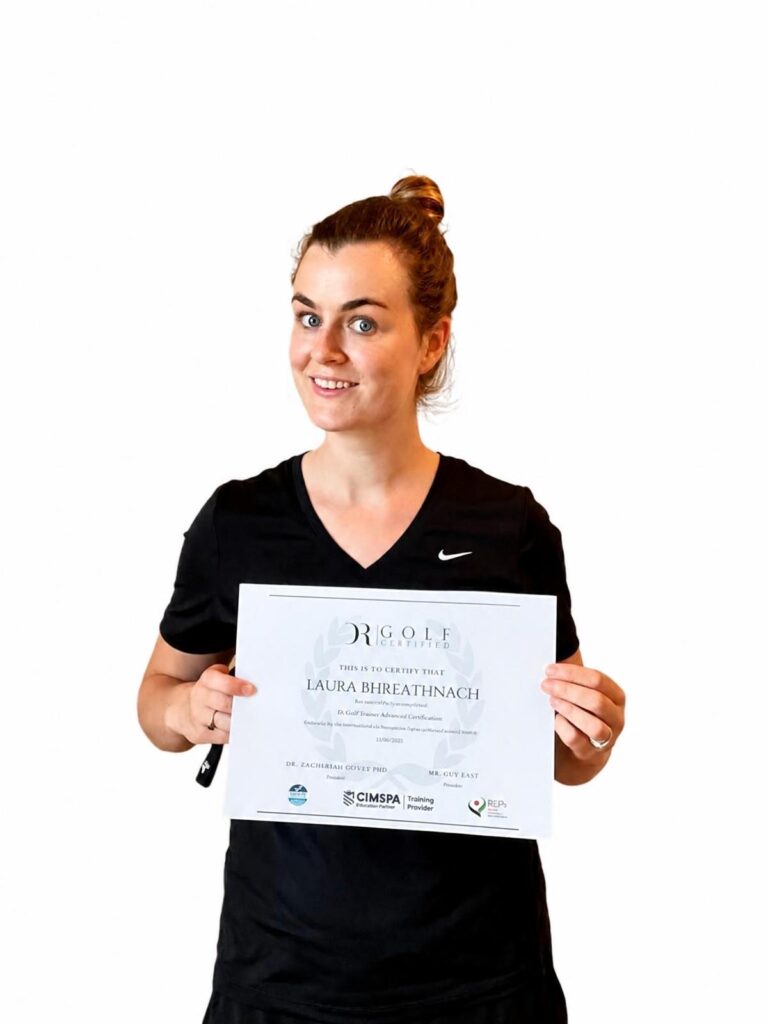
Laura Bhreathnach
Laura is the Managing Director and Senior Chartered Physiotherapist at PREP Physio in Ballsbridge. She holds an MSc in Advanced Physiotherapy from UCD and has over 10 years’ experience in private practice and elite sport, including Scottish Rugby and Scottish Golf.
Book an appointment at PREP Physio
62 Baggot Lane, Ballsbridge, Dublin 4 – Monday to Friday, 7am to 7pm.