
Pregnancy Massage: What to Expect and When to Book
Your body does an extraordinary amount of work during pregnancy – and most of it happens quietly, in muscles and joints you’d never thought about before. If your lower back, hips or shoulders are feeling it, a pregnancy massage can be one of the kindest things you do for yourself. Here’s what it involves, what it can help with, and how to get the most from it.
The short answer
- It’s a massage designed around a pregnant body – not a normal massage done more gently
- You’re positioned and supported so you’re comfortable throughout – usually on your side
- It commonly focuses on lower back, hip, neck and shoulder tension
- Every treatment is adapted to you and your stage of pregnancy
Why pregnancy brings aches you’ve never had before
Think about how much your body is carrying and compensating for. As your bump grows, your centre of gravity shifts forward, and the muscles of your lower back and hips work harder to keep you upright. Your shoulders and upper back often round forward as your breasts change and, later on, as you prepare to feed and carry a newborn. Add in broken sleep, and it’s no surprise so many people feel tight, achy and tired.
None of this means something is wrong – it’s your body adapting. But it does mean some extra support can make a real difference to how you feel day to day.
What is pregnancy massage?
Pregnancy massage is built around your changing body: how you’re positioned, how you’re supported and which techniques are used are all chosen so you can relax completely while the tight, overworked areas get some attention. It’s not a “gentler version” of a normal massage so much as a different one – built around a body that’s changing week by week.
What can it help with?
Treatment may focus on:
- The lower back that aches by the end of the day
- Tight hips and buttocks from carrying extra load
- Neck and shoulders that creep up towards your ears
- A stiff upper back from rounding forward
- That general, all-over tiredness that pregnancy brings
And honestly? Many people say the biggest benefit is simply an hour where nobody needs anything from them. Time to lie down comfortably, switch off and look after you is valuable in itself.
“Will I have to lie on my front?”
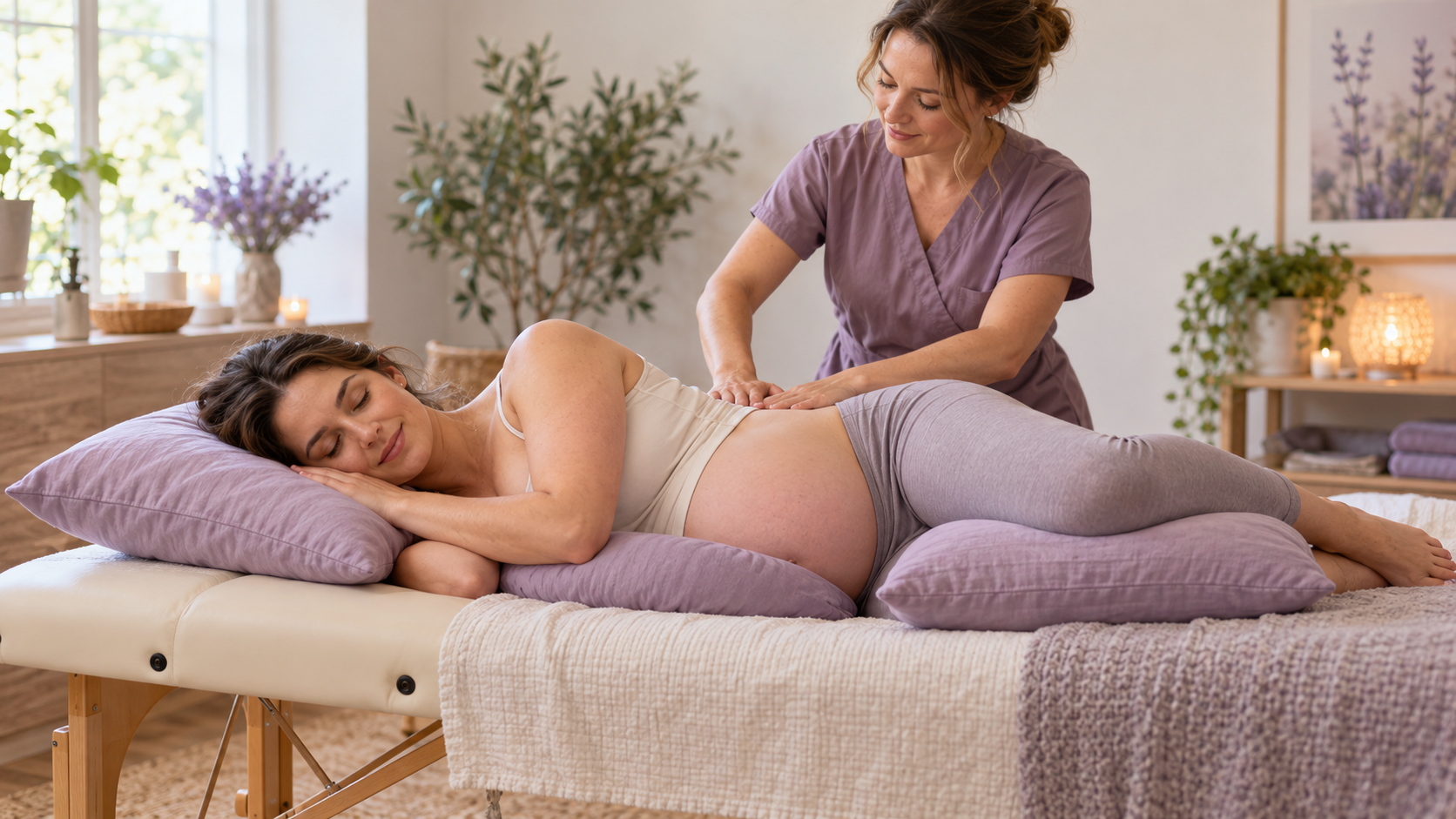
No – and this is the question we’re asked most. As pregnancy progresses, lying face-down stops being comfortable, and lying flat on your back for long periods can leave some people feeling light-headed. So pregnancy massage is usually done with you lying on your side, supported by pillows and cushions under your bump, between your knees and behind your back. You’ll never be asked to stay in a position that doesn’t feel right – just say, and we’ll adjust.
What happens during a session
- A quick chat first. We’ll talk through where you are in your pregnancy, how you’ve been feeling and anything your doctor or midwife has told you.
- Getting comfortable. You’re positioned and supported so you can properly relax.
- Treatment that fits the week you’re in. What suits you at 16 weeks may be different at 34 – so the approach changes with you.
- Afterwards. Take your time getting up, have a drink of water, and if something needs more than massage, you can see one of our Chartered Physiotherapists without leaving the clinic.
Before you book
Because every session is shaped around where you are in your pregnancy, it helps to tell us how many weeks pregnant you are and about any relevant medical advice you’ve been given. If you have a pregnancy complication, or you’ve been advised to avoid certain activities, please check with your doctor or midwife first.
When it’s more than muscle tension: pelvic girdle pain – pain at the front or back of the pelvis, often worse on stairs, getting out of the car or turning in bed – is common in pregnancy and often responds well to a physiotherapy assessment. If pain is getting in the way of everyday things like walking, stairs or sleep, don’t just put up with it – it’s worth having it checked.
Simple things to try at home
- Sleep on your side with a pillow between your knees – it keeps your pelvis level and eases strain on your hips and lower back.
- Keep moving little and often. Short walks and gentle movement are usually better than long periods sitting still.
- Get up from bed the “log roll” way: roll onto your side, drop your legs over the edge and push up with your arms.
- Keep your knees together when getting in and out of the car, especially if your pelvis is sore.
Pair it with 1:1 pre & postnatal Pilates
Massage eases tension; strength helps you carry the load. Many clients combine pregnancy massage with my physio-led 1:1 pre & postnatal Pilates – focusing on your pelvic floor, deep abdominal muscles and back. And when the time comes, my guide to returning to exercise after having a baby will help with the next chapter.
Frequently asked questions
What makes pregnancy massage different?
Everything is built around your bump: you lie on your side with cushion support, and techniques and pressure are chosen for comfort at your stage of pregnancy.
Do I lie on my front for a pregnancy massage?
No. Pregnancy massage is usually done lying on your side, supported by pillows, so you’re comfortable throughout.
How long is a pregnancy massage at PREP Physio?
Sessions are 60 minutes and cost €90. You may be able to claim back part of the cost through your health insurer, depending on your policy.
Who provides pregnancy massage at PREP Physio?
Our massage therapists Nicola Read and Murillo Dalmazo both provide pregnancy massage.
About the author
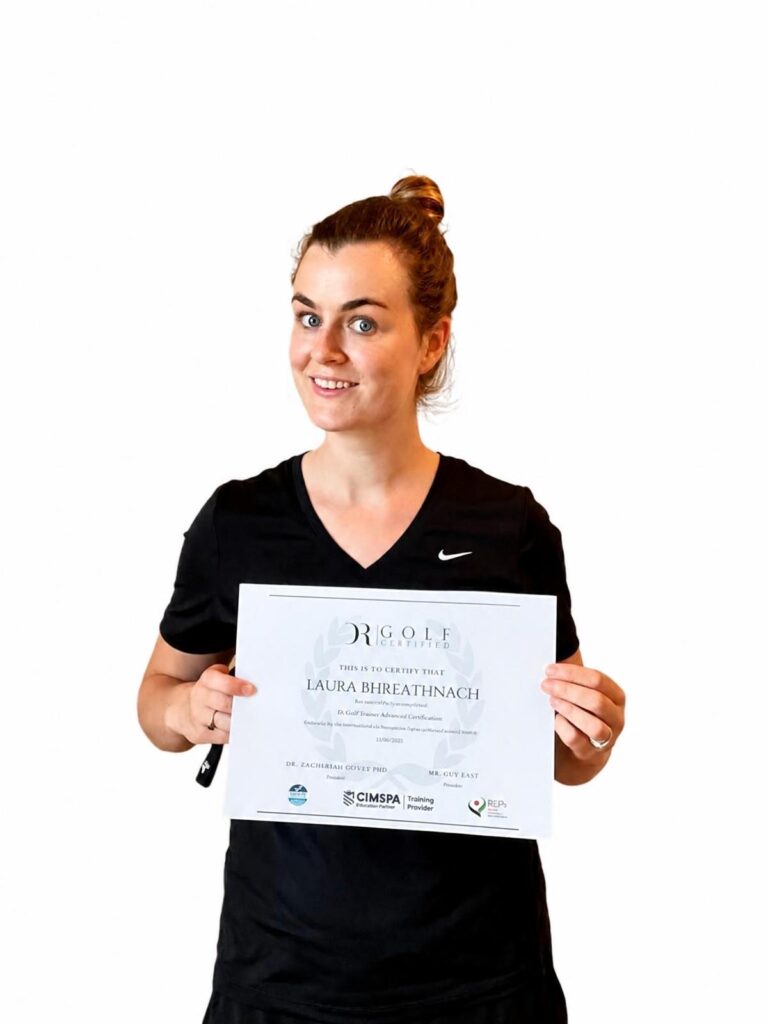
Laura Bhreathnach
Laura is the Managing Director and Senior Chartered Physiotherapist at PREP Physio in Ballsbridge. She holds an MSc in Advanced Physiotherapy from UCD and has over 10 years’ experience in private practice and elite sport, including Scottish Rugby and Scottish Golf.
Book an appointment at PREP Physio
62 Baggot Lane, Ballsbridge, Dublin 4 – Monday to Friday, 7am to 7pm.